
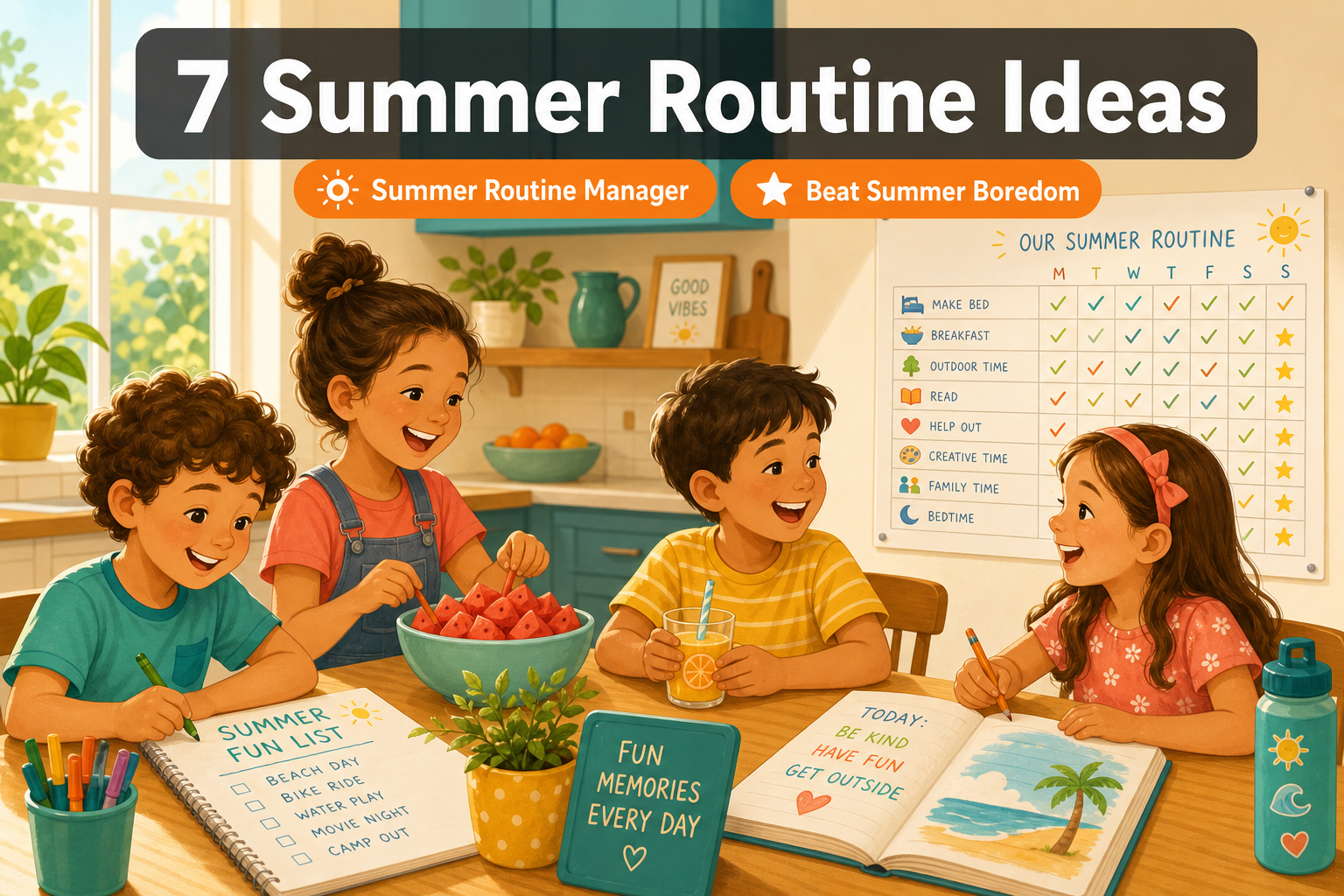
7 Summer Routine Ideas That Beat Boredom (Without Over-Scheduling Your Kids)
7 Summer Routine Ideas That Beat Boredom (Without Over-Scheduling Your Kids)
School's out. The calendar is blank. And by 10 a.m. on day three, someone's already said "I'm bored" three times. The answer isn't a color-coded minute-by-minute schedule—that burns everyone out. The answer is light structure: enough rhythm to beat summer boredom, enough flexibility to still feel like summer.
Quick Take: Pick 2–3 anchors (morning tasks, chores-before-fun, one weekly adventure). Keep the list visible. Use a Summer Routine Manager—paper chart or app—so you're not the only one remembering what's next.
1. Morning Anchors (Three Tasks Before Screens)
Start every day with the same short list—nothing more:
- Make bed (or tidy sleeping area)
- Breakfast cleanup (plate in sink, wipe table)
- One age-appropriate chore (see our age guide)
Why it works: Research on family routines shows predictable morning sequences reduce conflict and give kids a sense of competence. Three tasks take 15–20 minutes and create momentum before devices open.
Summer twist: Call it "beach morning" or "camp wake-up"—same tasks, fun label. Consistency matters more than branding.
2. Themed Days (Kill Decision Fatigue)
Assign loose themes to weekdays so you're not inventing plans at 8 a.m.:
| Day | Theme | Example |
|---|---|---|
| Monday | Library / learning | Books, puzzles, museum |
| Tuesday | Creative | Art, baking, building |
| Wednesday | Outdoor | Park, pool, hike |
| Thursday | Friend / social | Playdate, cousins |
| Friday | Free choice | Kid picks (within budget) |
You still have flexibility within each theme. The theme just answers "what kind of day is it?"—which alone cuts a huge chunk of summer boredom.
3. Chores-Before-Fun Rule
Same principle we use on holiday and vacation: contribution before consumption. Short summer chore list → then pool, screens, or outings.
Summer list example (adjust by age):
- Tidy room
- One household task (laundry, dishes, trash)
- Feed pet / water plants
When the rule is automatic, you're not negotiating every afternoon. For more on making routines stick long-term, see chore charts that stick.
4. The Boredom Jar
When "I'm bored" hits, kids pull a slip from a jar instead of waiting for you to entertain them.
Prep once: Write 20–30 ideas on paper strips—mix free (draw, build a fort), semi-structured (write a letter to a cousin), and productive (organize one drawer). Include a few chores-with-reward slips for bonus points or extra screen time.
Rule: Whatever they pull, they try for at least 20 minutes before swapping. This teaches self-starting—a skill that pays off when school starts again.
Want a ready-to-use template? Get the free printable summer routine chart — we'll email it to you.
5. Screen Time Tied to Contribution
Summer screen creep is real. Tie devices to the morning anchors + chore list instead of arbitrary timers alone. Our guide on screen time and chores walks through the "earn it first" model.
Simple version:
- Morning anchors done ✓
- Summer chore list done ✓
- → Screen time unlocked (with a daily cap you set once)
Kids learn that leisure follows responsibility—not that boredom equals unlimited YouTube.
6. One Weekly Adventure Slot
Plan one bigger outing per week—zoo, splash pad, movie, grandparents. Put it on the calendar where everyone sees it. Everything else stays flexible.
Why one, not five: Over-scheduled summers exhaust parents and kids. One anchor adventure gives the week something to look forward to and reduces "what are we doing today?" pressure on the other six days.
7. A Visual Schedule Kids Can Actually See
Whether it's a whiteboard, fridge printout, or app—the list must be visible to the kid, not just in your head. Visibility beats nagging because the chart becomes the boss, not you.
Options:
- Paper: Our free printable summer routine chart has Mon–Sun blocks, morning anchors, and a savings goal line.
- Digital: A Summer Routine Manager like KiddiKash lets kids check off tasks on their own dashboard—same psychology, less paper on the fridge.
For the mindset behind "forever routines," read the routine mindset.
Putting It Together: A Sample Summer Day
| Time | What |
|---|---|
| 8:00 | Morning anchors (bed, breakfast, one chore) |
| 9:00–12:00 | Themed activity (e.g. Wednesday = outdoor) |
| 12:00 | Lunch + quick tidy |
| 1:00–4:00 | Quiet time / boredom jar / free play |
| 4:00 | Chores-before-fun check → screens or outing |
| Evening | Family dinner, wind-down routine |
Adjust times; keep the sequence.
The Bottom Line
You don't need a military schedule to beat summer boredom. You need anchors, visibility, and a chores-before-fun rule. Pick the ideas that fit your family, write them where kids can see them, and stay consistent for two weeks before tweaking. Light structure beats chaos—and still feels like summer.
Want a ready-to-use template? Get the free printable summer routine chart — we'll email it to you.
Further reading
Tags
Free Printable Summer Routine Chart
Beat summer boredom with a detailed Mon–Sun timetable—morning anchors, themed days, chores, screen time, and savings goals.
Prefer the full page? Open the download page.
Turn your summer routine into a system kids actually follow — try KiddiKash as your Summer Routine Manager Join KiddiKash.